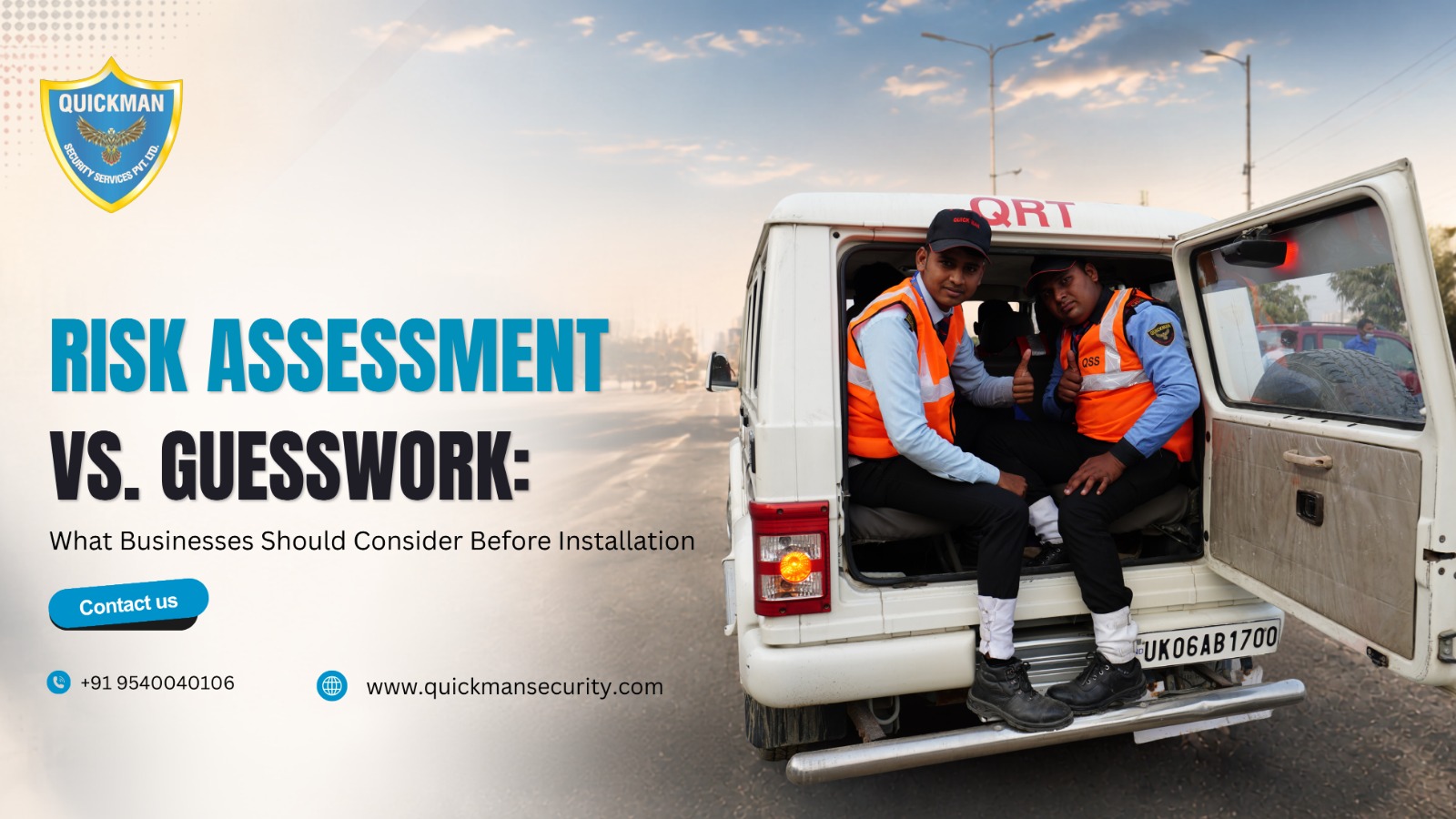
A security problem rarely begins with a loud alarm.
Sometimes, it starts quietly.
A side entrance remains poorly monitored. A warehouse has a blind spot. Visitor movement increases, but the security arrangement stays the same. Nobody notices the weakness until something goes wrong.
This is where risk assessment becomes important.
Instead of guessing how much security a property needs, businesses can first understand where the risks are, how serious they are and what kind of protection can actually address them.
Risk Assessment: From Assumptions to Action
Consider two approaches to security.
Guesswork:
The property is large, so we need more guards.
Data-driven planning:
These are the vulnerable areas, these are the high-risk hours, and this is where additional protection is needed.
The second approach gives security teams something much more valuable: clarity.
A proper risk assessment can examine access points, visitor movement, previous incidents, vulnerable areas, surveillance gaps, valuable assets, and emergency response requirements.
Once these details are understood, security decisions become more precise. Instead of simply increasing manpower, organizations can build protection around the risks that actually matter.
Why Delhi NCR Needs Security That Fits the Site
A corporate office in Delhi does not necessarily face the same security challenges as a warehouse in Noida. A residential community in Gurgaon may require a completely different approach from a commercial facility in Faridabad.
Even properties of similar size can have very different security requirements.
Factors such as these can change the picture:
· Number of entry and exit points
· Daily visitor movement
· Operating hours
· Property layout
· Type and value of assets
· Surrounding activity
This is why choosing a manpower security company should not be based only on how many guards it can provide.
The better question is: Can the security team understand the site and deploy manpower where it will have the greatest impact?
When the Right Guard Matters More Than More Guards
Imagine a facility with several guards stationed at its main entrance. At first glance, it appears well protected.
But a closer assessment reveals something else.
The rear entrance has limited supervision. Lighting is poor after dark. Certain areas are rarely patrolled. Visitor movement becomes heavier during specific hours.
Adding another guard at the main entrance may not solve any of these problems.
A better security plan could reposition security guard services according to the site’s actual requirements. Trusted security guards can then focus on responsibilities such as access control, visitor verification, patrolling and monitoring vulnerable areas.
The objective is not simply to increase manpower.
It is to make every security resource count.
Where Technology and Human Security Work Together
Not every risk can be handled by manpower alone.
Some properties may benefit from 24×7 monitoring solutions, especially where continuous surveillance is important. Monitoring can complement on-ground security by providing another layer of visibility.
Similarly, certain situations may require emergency security guards who can provide additional support when there is an unexpected security concern, event or temporary increase in risk.
The strongest approach is often not people versus technology.
It is people plus technology, guided by the right assessment.
What Guesswork Can Easily Miss
Security plans created from assumptions often focus on what is visible.
A risk-based approach looks deeper.
It asks:
Where could an incident happen?
When is the site most vulnerable?
How quickly can the team respond?
Are the current guards positioned effectively?
Which areas require additional monitoring?
These questions help turn security from a routine arrangement into a planned protection strategy.
A Security Plan Should Evolve With the Risk
A site does not remain the same forever.
New employees join. Working hours change. Construction creates new access points. Visitor numbers increase. Valuable equipment is added. New security concerns emerge.
When circumstances change, the security plan should be reviewed too.
Regular risk assessment helps organisations identify these changes and adjust their security arrangements before a small vulnerability becomes a larger problem.
For businesses and properties across Delhi NCR, this approach can make security more responsive, practical, and effective.
Smart Security Starts Before Something Goes Wrong
Good security is not about predicting every possible incident.
It is about reducing the chances of being unprepared.
When security guard services, monitoring and emergency support are selected based on actual risks, businesses can create a stronger and more purposeful security environment.
Quickman Security takes a practical, risk-focused approach to helping organisations protect their people, property and operations.
Don’t leave your security to guesswork; choose Quickman Security for protection built around your actual risks.